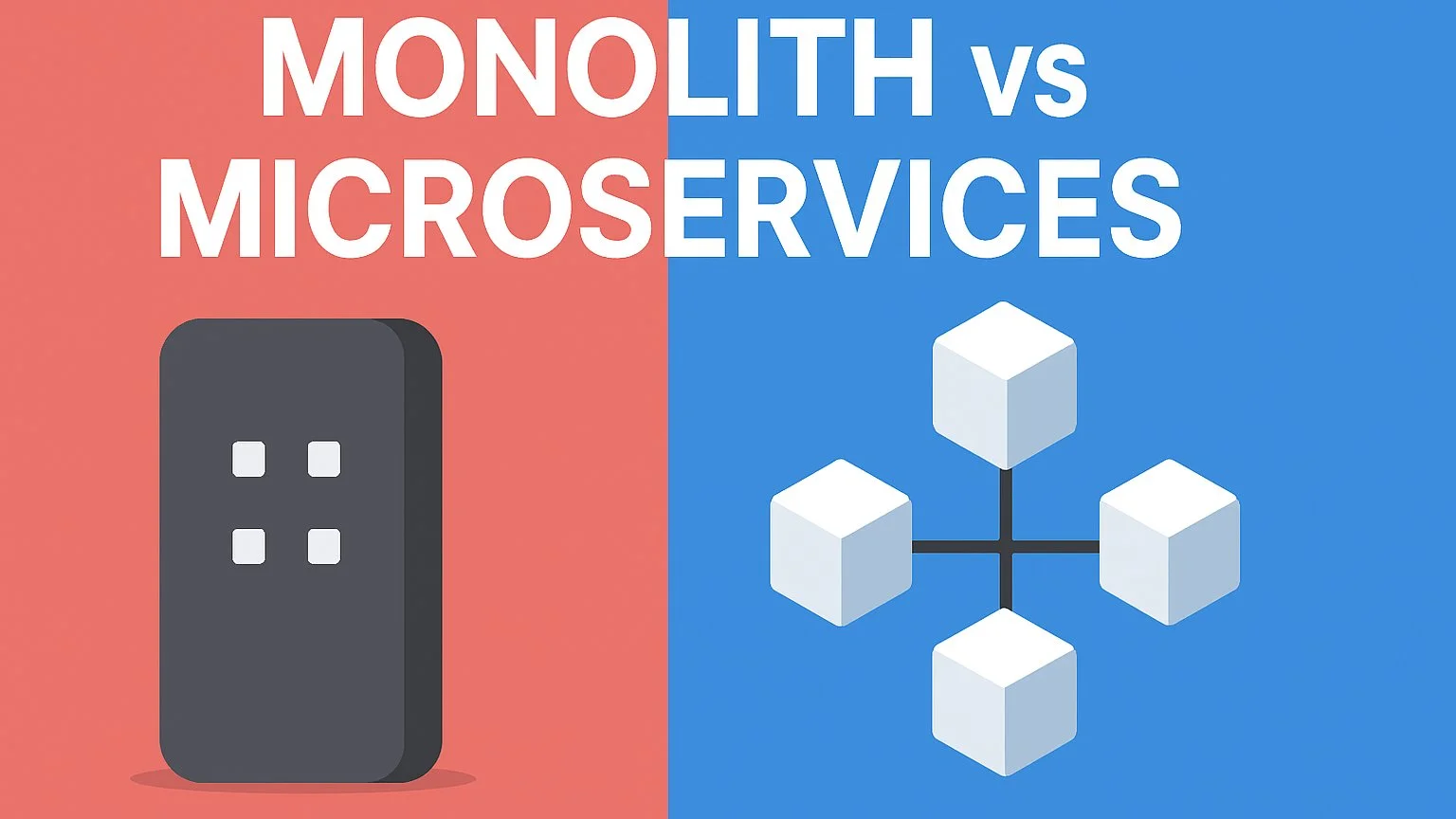

When building a software application, there are two popular ways to organize the code and services: Monolithic Architecture and Microservices Architecture. Let’s break down what these mean, their pros and cons, and when to use each.
What is Monolithic Architecture?
Monolithic architecture means building an application as one big, single unit. Everything — the user interface, business logic, and database access — is combined into one codebase and runs together.
Key Points About Monolithic Architecture:
- Single Codebase: All the features are written together in one place.
- Tightly Connected: Different parts of the app depend heavily on each other.
- One Deployment: You deploy (release) the whole app at once.
- Scaling: To handle more users, you copy the entire app rather than just one part.
- Simple Setup: Easier to start with because everything is in one place.
Advantages of Monolithic Architecture:
- Easy to Develop: Good for small projects or when the team is small.
- Better Performance: Since all parts are together, they can work faster.
- Simple Testing: Testing the entire app is straightforward because it’s one unit.
- Less Network Trouble: No need for communication over the network between services.
Disadvantages of Monolithic Architecture:
- Hard to Scale: You can’t scale just one feature; you have to scale the whole app.
- Maintenance Gets Tough: As the app grows, the code becomes big and complicated.
- Risky Deployments: A small bug can crash the entire application.
- Slower Updates: Changing one part requires redeploying everything, which can slow down releases.
What is Microservices Architecture?
Microservices architecture breaks the application into many small, independent services. Each service handles a specific function and works on its own but communicates with others over APIs (like little messengers).
Key Points About Microservices Architecture:
- Independent Services: Each service can be built, tested, and deployed separately.
- Loosely Connected: Changes in one service don’t affect the others much.
- Different Tech: Each service can use different programming languages or tools.
- Fault Tolerant: If one service crashes, the rest can keep working.
- Easier to Scale: You can scale only the services that need more resources.
Advantages of Microservices Architecture:
- Better Scalability: Scale individual parts without scaling everything.
- Flexibility: Use the best tools for each service.
- Faster Updates: Smaller code means quicker changes and deployments.
- Improved Reliability: One service failing doesn’t bring down the whole app.
- Better for Big Teams: Different teams can own different services.
Disadvantages of Microservices Architecture:
- Complex Setup: Managing many services can be tricky.
- More Overhead: Communication between services can cause delays.
- Harder Testing: Need to test each service and how they work together.
- More Dev Effort: Designing APIs and managing multiple services takes time.
Quick Comparison Table
| Feature | Monolithic Architecture | Microservices Architecture |
|---|---|---|
| Structure | One big application | Many small independent services |
| Codebase | Single, unified | Multiple, separate |
| Deployment | Deploy everything at once | Deploy services individually |
| Scaling | Scale entire app | Scale only what’s needed |
| Complexity | Simple for small apps | More complex, needs management tools |
| Maintenance | Hard as app grows | Easier by managing small services |
| Performance | Usually faster internally | Network calls between services can slow things |
| Fault Tolerance | One bug can crash everything | One service failure doesn’t break whole app |
| Technology Flexibility | Limited to one tech stack | Different services can use different tech |
When to Use Which?
- Choose Monolithic if:
- Your app is small or simple.
- You want to develop and launch quickly.
- You have a small team.
- You don’t expect huge scaling needs soon.
- Choose Microservices if:
- Your app is large or expected to grow a lot.
- You have multiple teams working on different parts.
- You want flexibility in technology choices.
- You need your app to be highly scalable and fault-tolerant.
Summary
Monolithic architecture is simple and fast for smaller apps, but can get complicated and hard to scale as your app grows. Microservices offer more flexibility and scalability by breaking the app into small parts but come with extra complexity in managing those parts.
Choosing the right architecture depends on your project size, team, future plans, and how fast you want to grow. Understanding both will help you make the best decision for your application.